
Water where it shouldn't be? Start with a clear next step.
Tell us where the water came from to check available options for your property.
A typical response path
What a water damage conversation commonly covers. The actual process depends on the contractor and the property.
- 1
Stop the source
Shutting off the water or isolating the leak comes first.
- 2
Assess the area
Moisture is often checked in floors, walls and materials nearby.
- 3
Discuss drying
Mitigation and drying approaches are talked through for your situation.
- 4
Plan next steps
Any repairs are discussed once the area's condition is understood.
Safe first actions
- 1Shut off the main water valve if you can do so safely
- 2Stay away from standing water near outlets or appliances
- 3Move valuables and documents to a dry area
- 4Take photos of the affected areas
- 5Note when you first noticed the water
If there's an immediate safety risk, call 911.
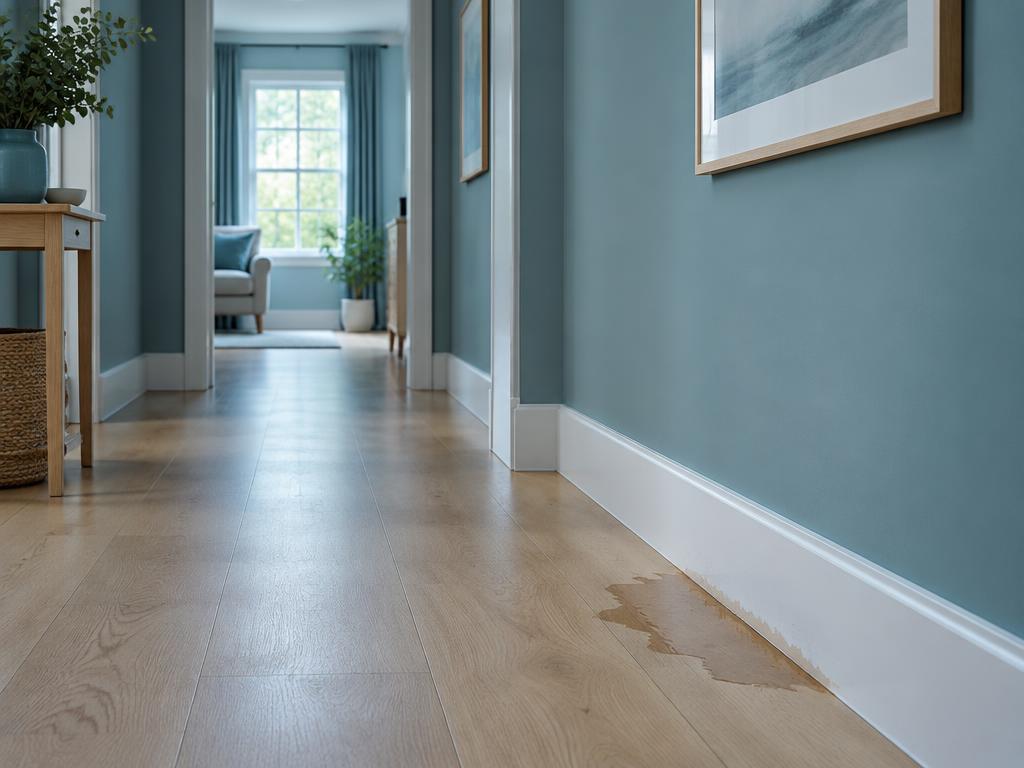
How the water damage review works
Source and spread
You tell us where the water came from and how far it reached.
ZIP check
We see which water damage options may be available for your property.
Direct conversation
If options exist, you discuss assessment, drying and next steps directly.
What an assessment can look at
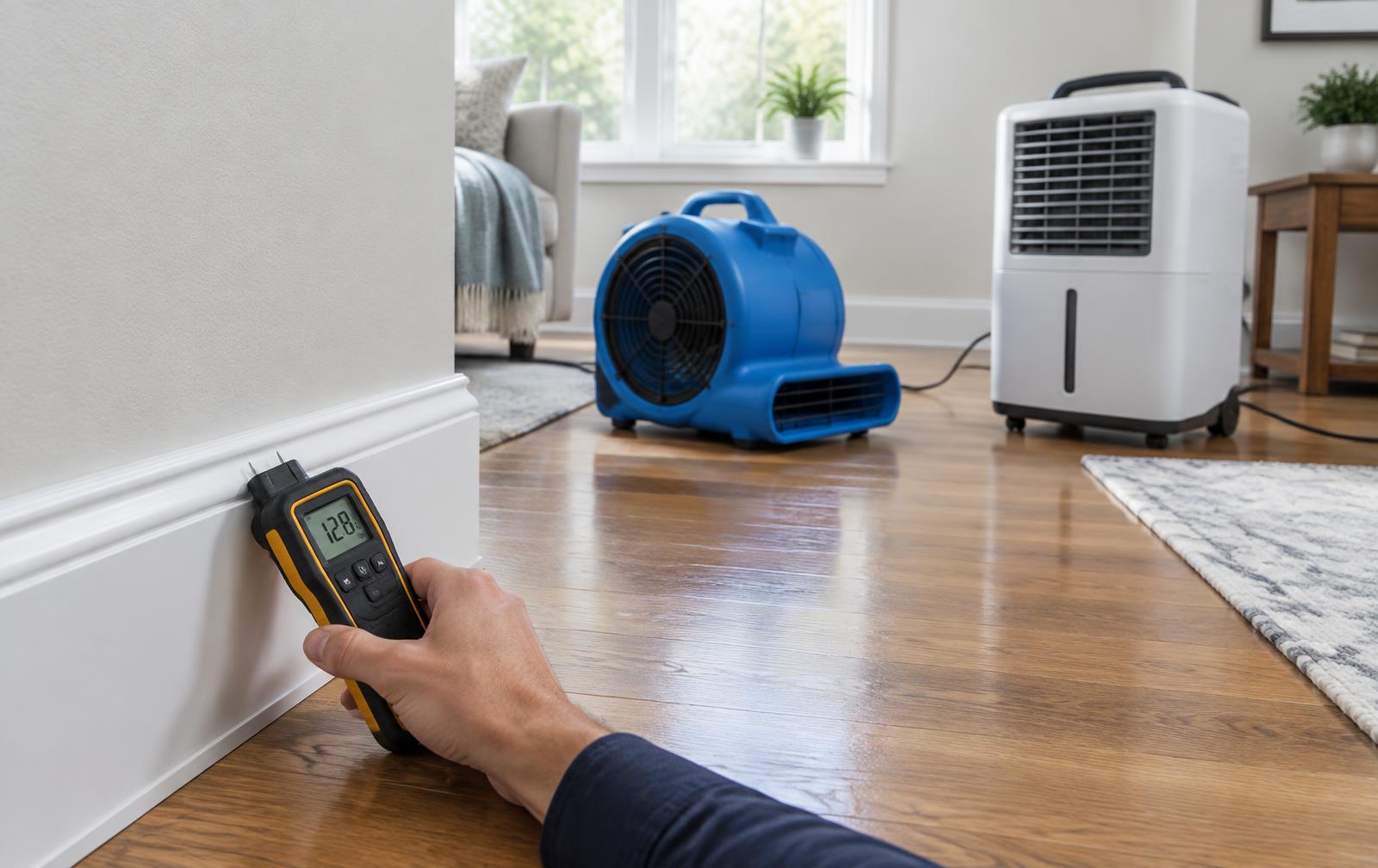
Moisture readings
Meters at baseboards and floors help map where water traveled.
Air movement
Air movers may be placed to move air across wet surfaces.
Dehumidification
Dehumidifiers may be used to pull moisture from the room's air.
Equipment shown for context. What's used depends on the situation.
From source to spread
Water rarely stays where it starts. Understanding the path helps you describe the situation clearly.
Source
A supply line, appliance, water heater, roof opening or outside water. Knowing the source shapes every next step.
Surface
Visible water on floors and counters — the part most people notice first.
Wicking
Drywall, baseboards and wood pull moisture upward and sideways, often beyond the visible stain.
Hidden cavities
Water can travel under flooring, inside walls and into ceilings below.
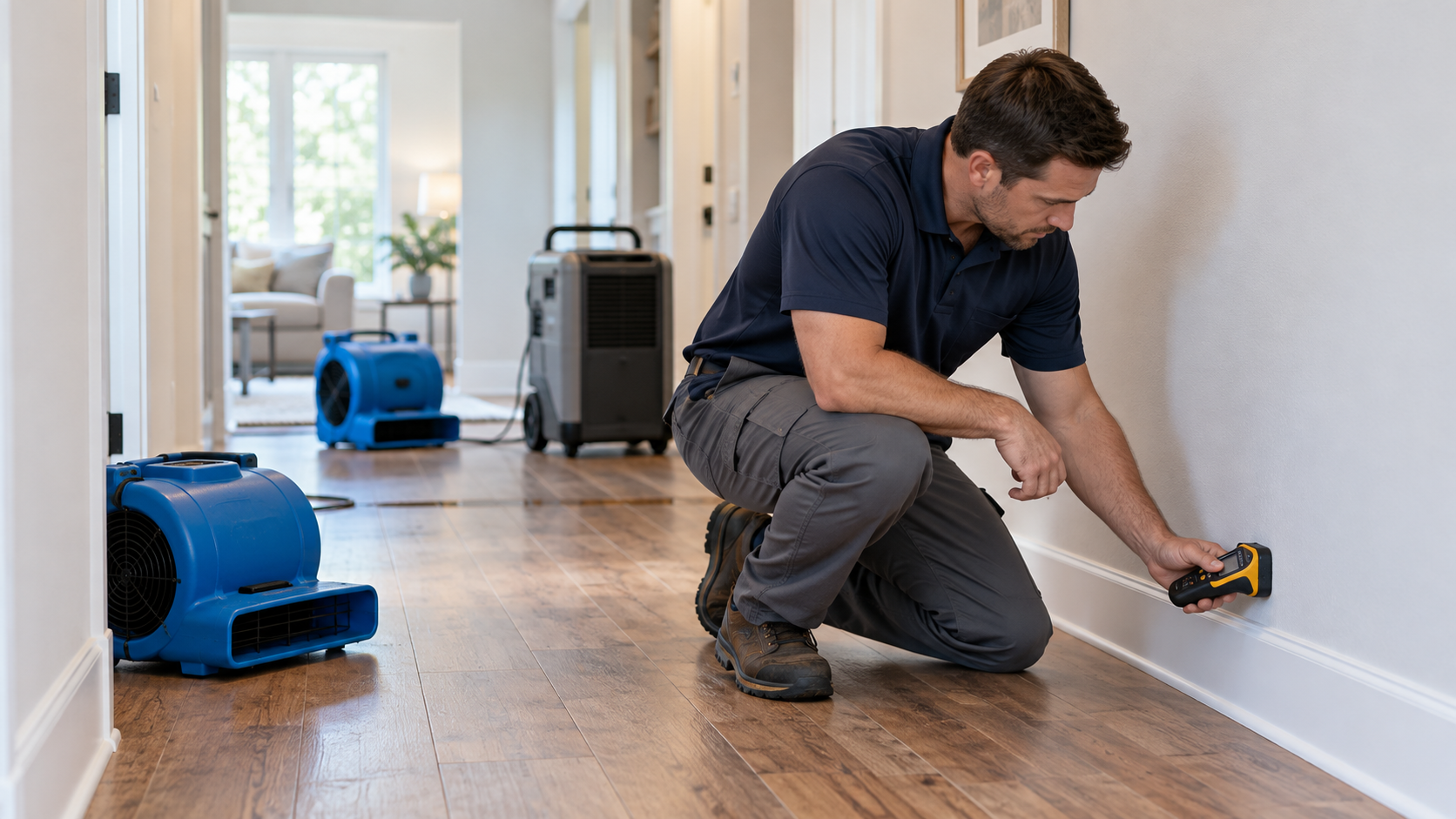
Safety comes before cleanup
Only take steps you can do safely. If anything feels uncertain, leave it alone.
If there is an immediate safety risk, call 911.
Electricity
Do not walk through standing water near outlets or appliances. Shut power off at the panel only if you can reach it from a dry spot.
Shut-off
If it is safe, close the main water valve or the valve for the fixture involved.
Ceilings
Stay out from under a bulging or sagging ceiling.
Records
Photos and short videos before moving things help when you talk with your insurer.
What an assessment and drying conversation may cover
Every property is different. These are common topics — not a promise of a specific process, timeline or result.
- 01
Moisture mapping
Checking where water has traveled, including areas that look dry.
- 02
Materials
Which items may be dried in place and which may need removal.
- 03
Air movement
How drying equipment and ventilation might be used.
- 04
Follow-up checks
Re-measuring moisture over time before rebuilding is discussed.
Questions commonly covered
Helpful to think about ahead of time. None of it is required to get started.
- 01Whether the area is safe to enter (power, ceilings, floors)
- 02The likely source — pipe, appliance, roof or outside water
- 03Which materials got wet: drywall, carpet, wood, cabinets
- 04When the water was first noticed
Water damage questions
Get the water situation in front of someone.
You only need a few details to start.