
Get your roof looked at before a small problem spreads.
Share a few details about your roof to check available options for your property.
How the roofing availability review works
- 01
You describe the roof
Your concern, property type and timing.
- 02
We check your ZIP
We look at which roofing options may be available where the property is.
- 03
You talk it through
If options exist, you discuss inspection, repair or replacement directly.
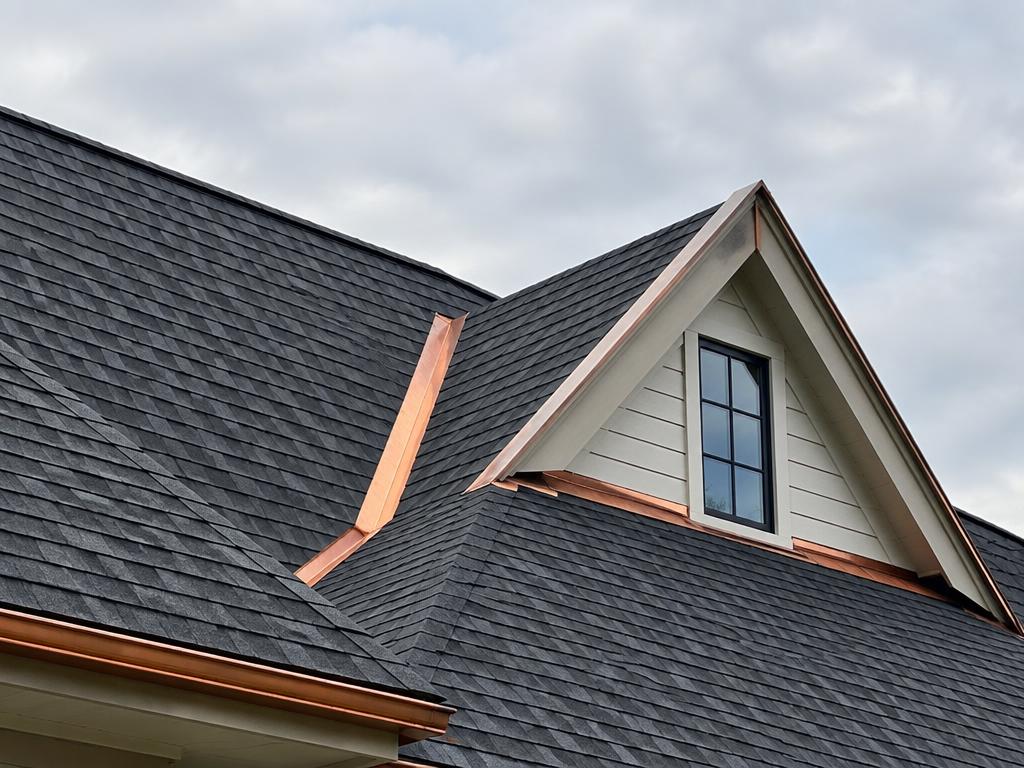
Signs worth discussing
- Water stains on a ceiling or upper wall
- Shingles that are curled, cracked or missing
- Granules collecting in gutters
- Flashing that looks lifted around a chimney or vent
- Daylight visible in the attic
- Recent hail or high wind in your area
Common roofing materials
Materials homeowners often ask about. These are common options to discuss — not a list of products we promise.
Architectural asphalt shingles
Common on pitched roofs. Worth discussing: roof pitch, ventilation and how the underlayment is handled.
Standing seam metal
Long vertical panels. Worth discussing: panel profile, fastening method and noise or color preferences.
Terracotta clay tile
Distinctive curved profile. Worth discussing: structural weight, roof shape and matching existing tile.
Concrete tile
Flat or shaped profiles. Worth discussing: weight on the framing, color options and walkability for maintenance.
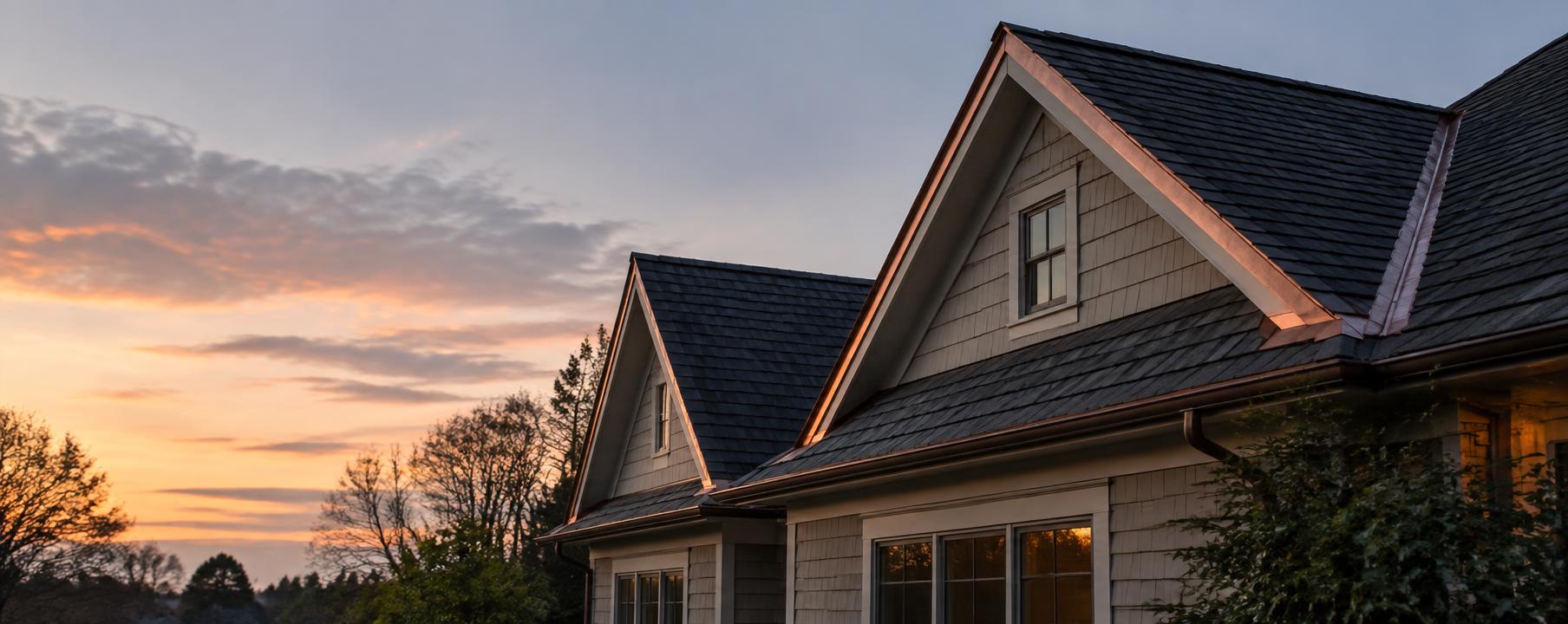
Stay on the ground. Many issues — lifted edges, flashing gaps, sagging gutters — can be noted from the yard without climbing.
A roof is a system, not a surface
What you see from the street is only the top layer. Each part below it has its own job, and a problem in one can show up somewhere else.
Roof deck
The boards or sheathing that carry everything above. Soft spots or sagging can point to moisture that has been there a while.
Underlayment
A water-resistant layer between the deck and the shingles — the backup when wind-driven rain gets under the top layer.
Shingles or panels
The weather surface. Look for lifted edges, missing pieces, cracking or granules collecting in gutters.
Flashing
Metal or membrane pieces around chimneys, vents, skylights and walls. Many leaks start at these joints, not in the open field of the roof.
Things worth weighing when you talk materials
There is no single right answer. These are questions to bring to the conversation, not a recommendation.
- Repair or replace
- How widespread is the issue, how old is the roof, and does a patch match what is already there?
- Weight and structure
- Heavier materials may need the structure checked before they are considered.
- Climate and exposure
- Sun, hail, wind and snow load all affect which options make sense for a given home.
- Ventilation
- Attic airflow affects heat and moisture under the roof and is often discussed alongside materials.
A visual checklist you can do from the ground
Stay off the roof. Binoculars and a walk around the house are enough to take notes before you talk to anyone.
Ridge line
Does it look straight, or is there a dip?
Edges and eaves
Any lifted, curled or missing pieces?
Gutters
Heavy granule buildup or pulling away from the fascia?
Around penetrations
Staining or gaps near vents, chimneys and skylights?
Attic ceiling
Water marks, daylight or damp insulation?
Interior ceilings
New stains, especially after a storm?
Photos taken from the ground are useful to share. Do not climb onto a damaged or wet roof.
Questions commonly covered
Helpful to think about ahead of time. None of it is required to get started.
- 01What material is on the roof now, and roughly how old it is
- 02Roof shape — gable, hip, low-slope or a mix
- 03Flashing around chimneys, vents and skylights
- 04Where you've noticed stains, drips or missing pieces
Roofing questions
Ready to talk about your roof?
Share the details when you're ready.